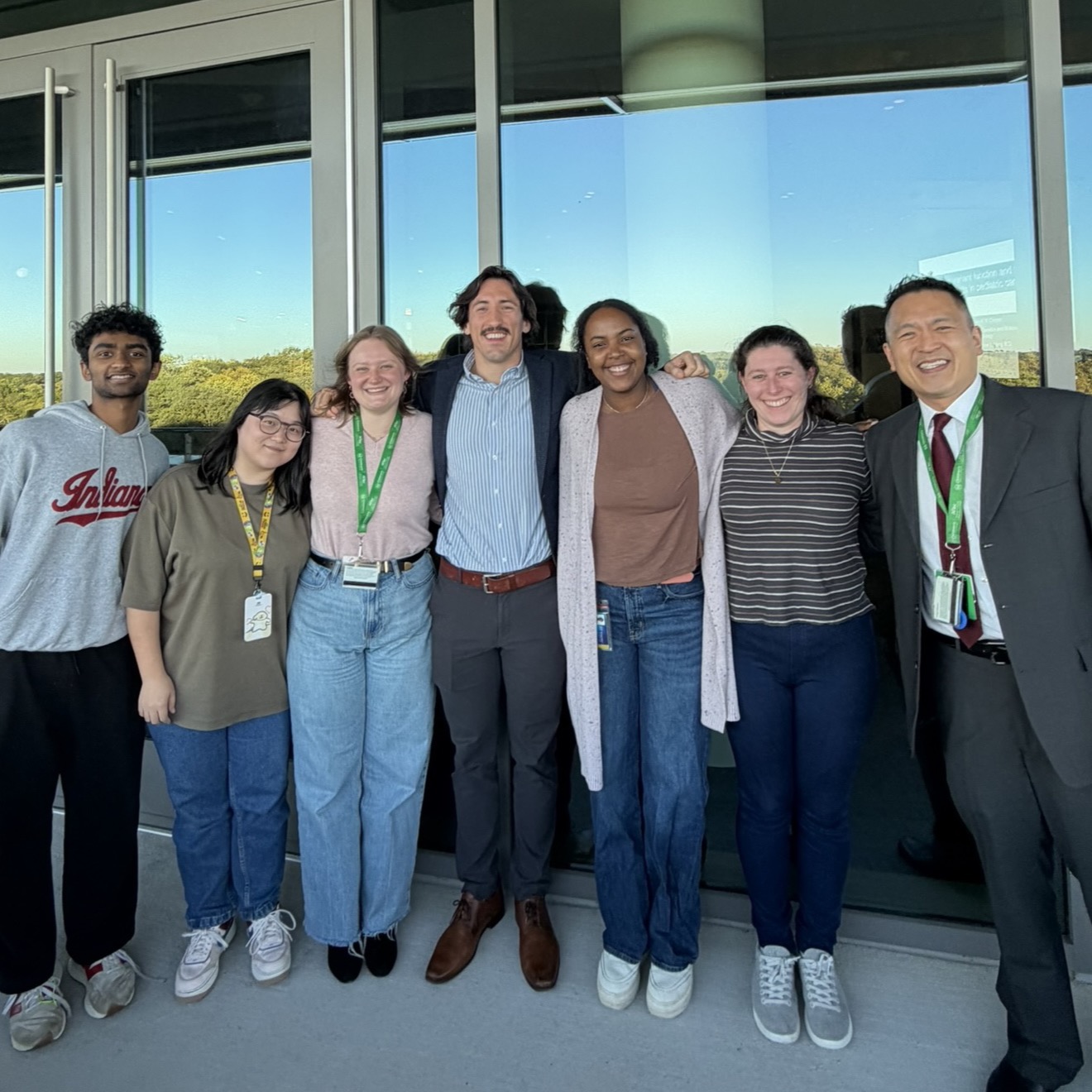
<?xml version="1.0" encoding="utf-8"?><feed xmlns="http://www.w3.org/2005/Atom" ><generator uri="https://jekyllrb.com/" version="3.10.0">Jekyll</generator><link href="https://garrettc00per.github.io/feed.xml" rel="self" type="application/atom+xml" /><link href="https://garrettc00per.github.io/" rel="alternate" type="text/html" /><updated>2026-03-24T19:42:16+00:00</updated><id>https://garrettc00per.github.io/feed.xml</id><title type="html">Garrett Cooper</title><subtitle>PhD-trained biologist (Emory University) bridging wet lab and computational approaches to advance translational genomics. My work spans variant interpretation, multi-omics integration, and therapeutic target discovery, with roots in pediatric cancer research and a current focus on liquid biopsy and multi-cancer early detection at Exact Sciences.</subtitle><author><name>Garrett Cooper</name></author><entry><title type="html">I Defended My PhD!</title><link href="https://garrettc00per.github.io/blog/i-defended-my-phd/" rel="alternate" type="text/html" title="I Defended My PhD!" /><published>2025-11-03T00:00:00+00:00</published><updated>2025-11-03T00:00:00+00:00</updated><id>https://garrettc00per.github.io/blog/i-defended-my-phd</id><content type="html" xml:base="https://garrettc00per.github.io/blog/i-defended-my-phd/"><![CDATA[<p><img src="/assets/images/defense_photo.jpg" alt="Lab Photo Post PhD Defense" /></p>

<p>After over five years of research, I’m excited to announce that I defended my PhD dissertation in Genetics and Molecular Biology at Emory University.</p>

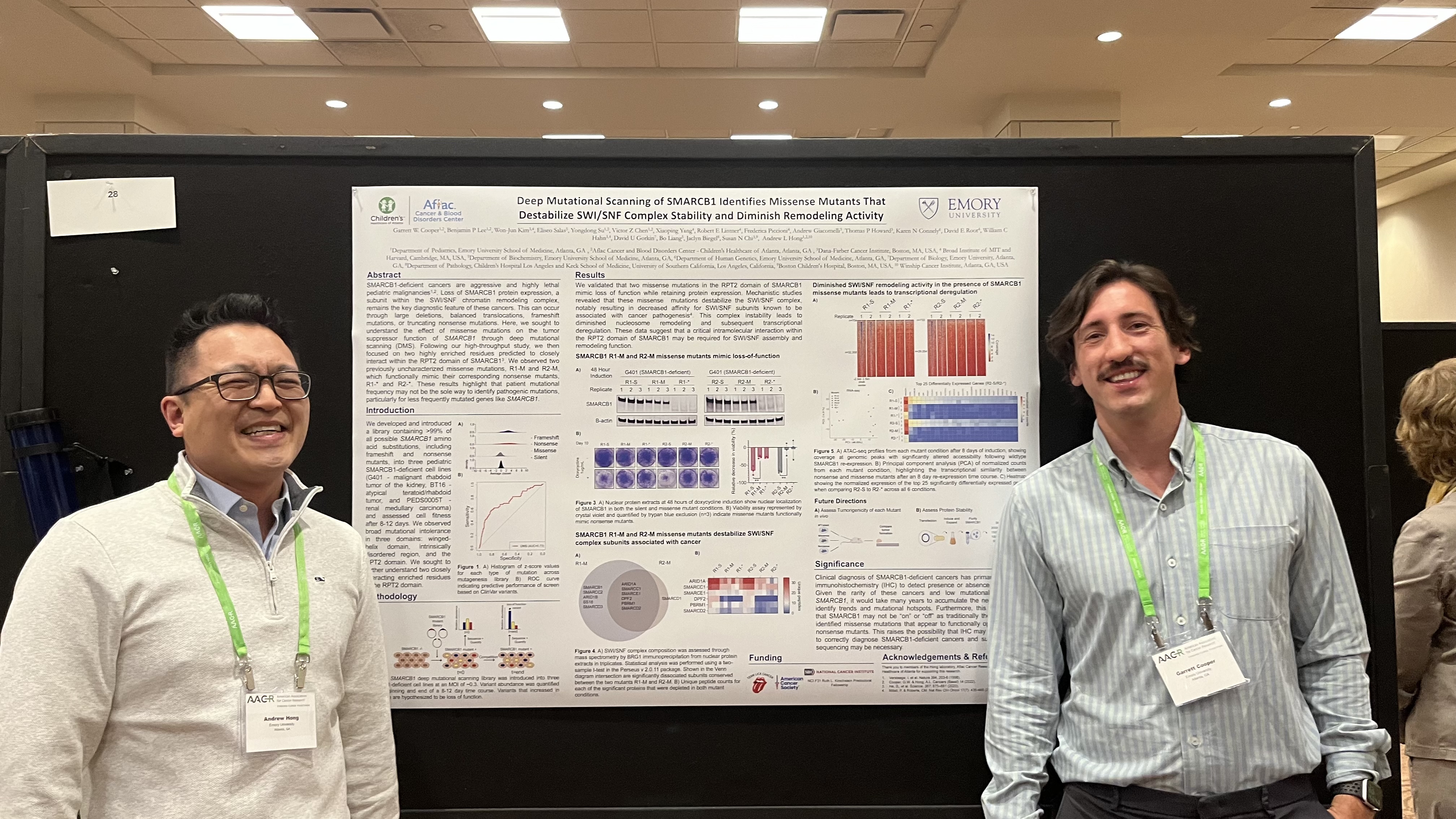
<p>My work focused on understanding how mutations in a gene called SMARCB1 can drive pediatric cancer. Specifically, I was focused on how single amino acid changes can disrupt the SWI/SNF chromatin remodeling complex and alter gene expression in ways that promote tumor development.</p>

<p>Integrating deep mutational scanning with multi-omics profiling, I found that certain missense mutations can be just as disruptive to SMARCB1 function as complete protein loss, which has important implications for how we diagnose and treat these cancers. Alongside that work, I contributed to a study identifying XPO1 as a therapeutic target in Wilms tumor, which has since advanced to Phase II clinical trials. These projects are a reminder of why this work matters beyond the bench.</p>

<p>This marks the end of an incredible journey of discovery, growth, and learning. I am deeply grateful to my advisor, Dr. Andrew Hong, for his mentorship and support throughout this process. He is truly a fearless leader who after all these years has created an exceptional lab that I’m so excited to see how it continues to grow and evolve. I also want to thank my committee members, Dr. David Katz, Dr. Roger Deal, Dr. Karen Conneely, and Dr. Carlos Moreno.</p>

<p>I also want to thank my labmates and collaborators who helped me throughout the years and who have made this experience so rewarding. I look forward to sharing my next adventure soon!</p>]]></content><author><name>Garrett Cooper</name></author><category term="blog" /><category term="PhD" /><category term="Defense" /><summary type="html"><![CDATA[I'm excited to announce that I defended my PhD dissertation in Genetics and Molecular Biology at Emory University.]]></summary></entry><entry><title type="html">I attended AACR 2025 in Chicago</title><link href="https://garrettc00per.github.io/blog/i-attended-aacr/" rel="alternate" type="text/html" title="I attended AACR 2025 in Chicago" /><published>2025-04-28T00:00:00+00:00</published><updated>2025-04-28T00:00:00+00:00</updated><id>https://garrettc00per.github.io/blog/i-attended-aacr</id><content type="html" xml:base="https://garrettc00per.github.io/blog/i-attended-aacr/"><![CDATA[<p><img src="/assets/images/AACR_photo.jpg" alt="Conference photo" /></p>

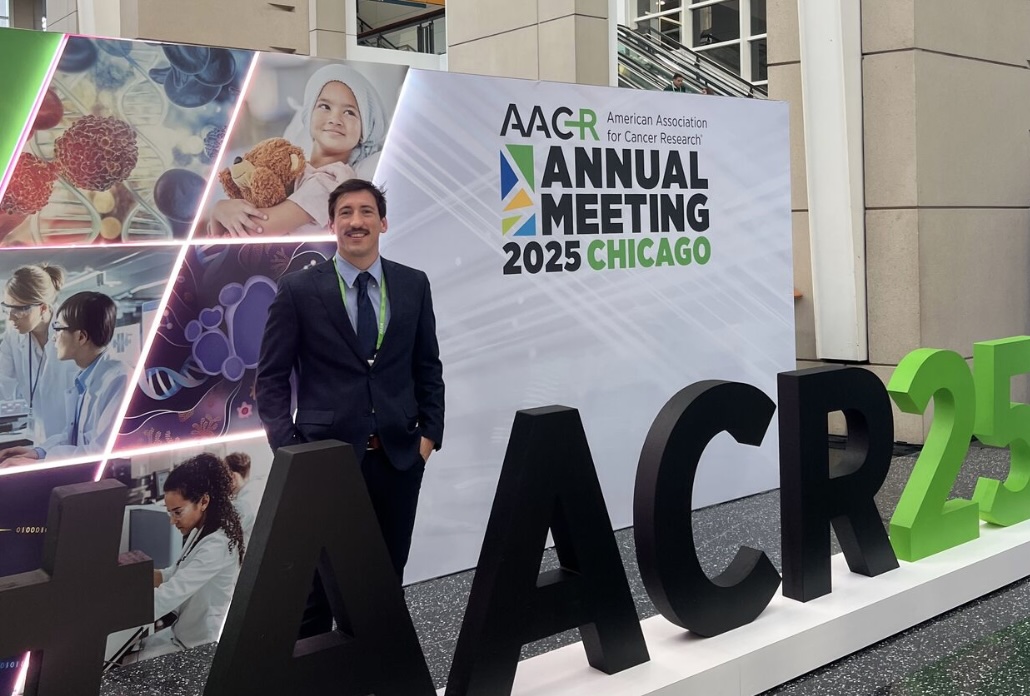
<p>I traveled to Chicago to attend <a href="https://www.aacr.org/meeting/aacr-annual-meeting-2025/">AACR 2025</a>, the annual meeting of the American Association for Cancer Research. It was an incredible experience to connect with researchers from around the world and learn about the latest advances in cancer research. I attended sessions on a wide range of topics, including cancer genomics, immunotherapy, and with a special focus on cfDNA studies.</p>

<p>I also presented our poster: “SMARCB1 missense mutants destabilize SWI/SNF complex stability and remodeling activity”, available here: <a href="https://doi.org/10.1158/1538-7445.AM2025-986">https://doi.org/10.1158/1538-7445.AM2025-986</a></p>

<p>It was a great opportunity to share our findings and get feedback from other researchers in the field. As much as I was there for the science, some of the best moments were catching up with old colleagues and meeting new ones.</p>]]></content><author><name>Garrett Cooper</name></author><category term="blog" /><category term="Cancer" /><category term="Conference" /><summary type="html"><![CDATA[I traveled to Chicago to attend AACR 2025, the annual meeting of the American Association for Cancer Research.]]></summary></entry><entry><title type="html">I attended Advances in Pediatric Cancer - AACR 2024 in Toronto</title><link href="https://garrettc00per.github.io/blog/i-attended-aacr-peds/" rel="alternate" type="text/html" title="I attended Advances in Pediatric Cancer - AACR 2024 in Toronto" /><published>2024-09-08T00:00:00+00:00</published><updated>2024-09-08T00:00:00+00:00</updated><id>https://garrettc00per.github.io/blog/i-attended-aacr-peds</id><content type="html" xml:base="https://garrettc00per.github.io/blog/i-attended-aacr-peds/"><![CDATA[<p><img src="/assets/images/AACR_peds_2024.jpg" alt="Conference photo" /></p>

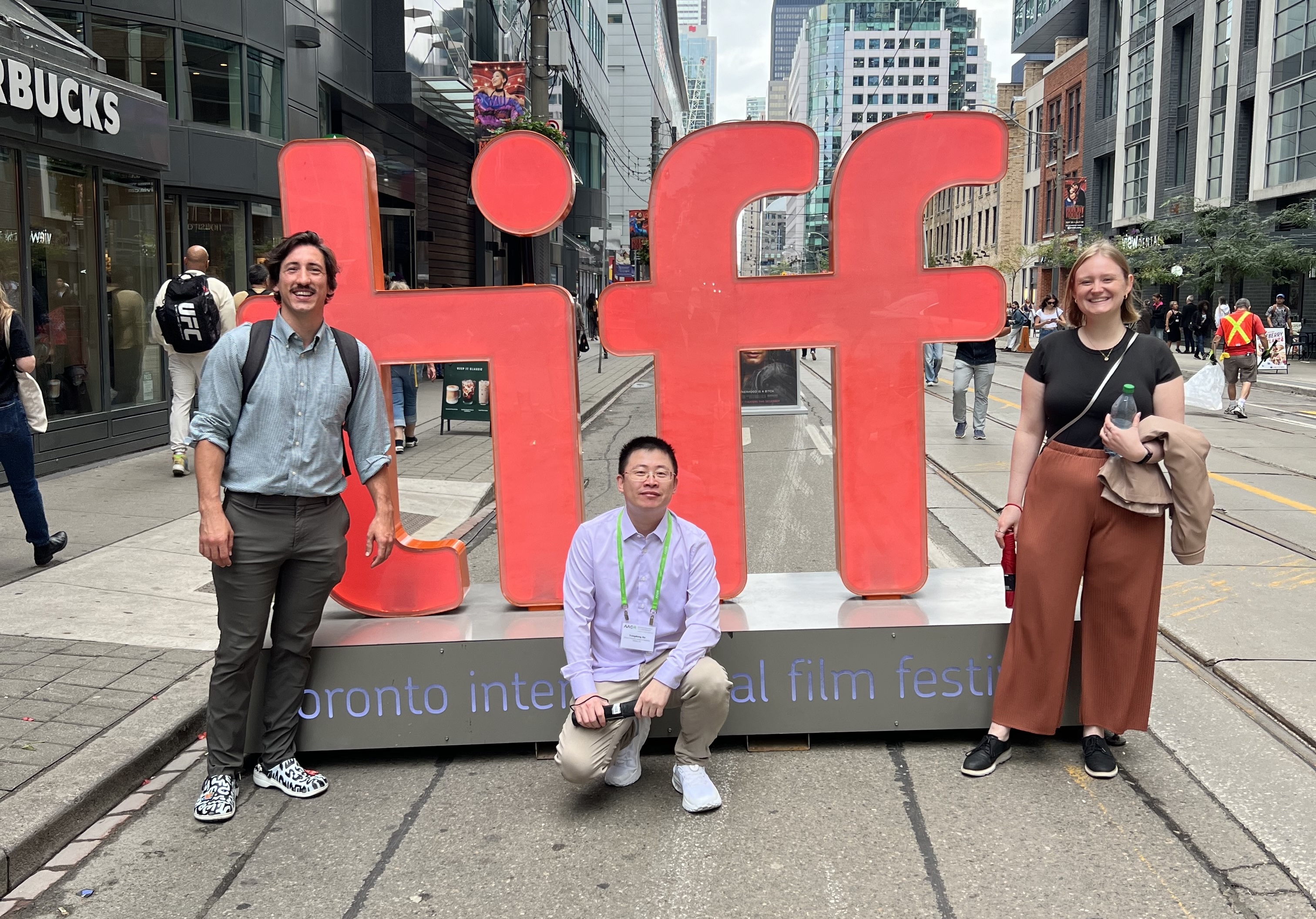
<p>I traveled to Toronto for the 2024 AACR Advances in Pediatric Cancer Research Conference. This was my first time in Canada and my first time attending a conference dedicated entirely to pediatric cancer.</p>

<p>The difference in atmosphere compared to a large meeting like AACR annual was immediately noticeable. Smaller room, more focused conversations, and a palpable sense of shared purpose that is harder to find in a crowd of 20,000 people. Everyone there had chosen to dedicate their careers specifically to improving outcomes for children with cancer, and that collective commitment was genuinely energizing.</p>

<p>I presented our poster ‘Deep mutational scanning of SMARCB1 identifies missense mutants that destabilize SWI/SNF complex stability and diminish remodeling activity,’ available here: https://doi.org/10.1158/1538-7445.PEDIATRIC24-B028. It was a great opportunity to share our findings with an audience that understands exactly why variant interpretation in pediatric tumors matters clinically.</p>

<p>I left Toronto reminded of why work is important and to keep pushing the work forward. Also was fun to stumble across the Toronto International Film Festival (TIFF) while we were there!</p>

<p><img src="/assets/images/toronto_tiff_photo.jpg" alt="TIFF_photo" /></p>]]></content><author><name>Garrett Cooper</name></author><category term="blog" /><category term="Conference" /><category term="Pediatrics" /><category term="Cancer" /><summary type="html"><![CDATA[I traveled to Toronto to attend the Advances in Pediatric Cancer AACR Meeting. Smaller and more focused than a large meeting like AACR Annual.]]></summary></entry><entry><title type="html">Our Search for Better Treatments for Wilms Tumor Published in Communications Biology</title><link href="https://garrettc00per.github.io/blog/comms_bio_man_published/" rel="alternate" type="text/html" title="Our Search for Better Treatments for Wilms Tumor Published in Communications Biology" /><published>2024-04-08T00:00:00+00:00</published><updated>2024-04-08T00:00:00+00:00</updated><id>https://garrettc00per.github.io/blog/comms_bio_man_published</id><content type="html" xml:base="https://garrettc00per.github.io/blog/comms_bio_man_published/"><![CDATA[<p>Our study, Targeting TRIP13 in favorable histology Wilms tumor with nuclear export inhibitors synergizes with doxorubicin, is published in Communications Biology.</p>

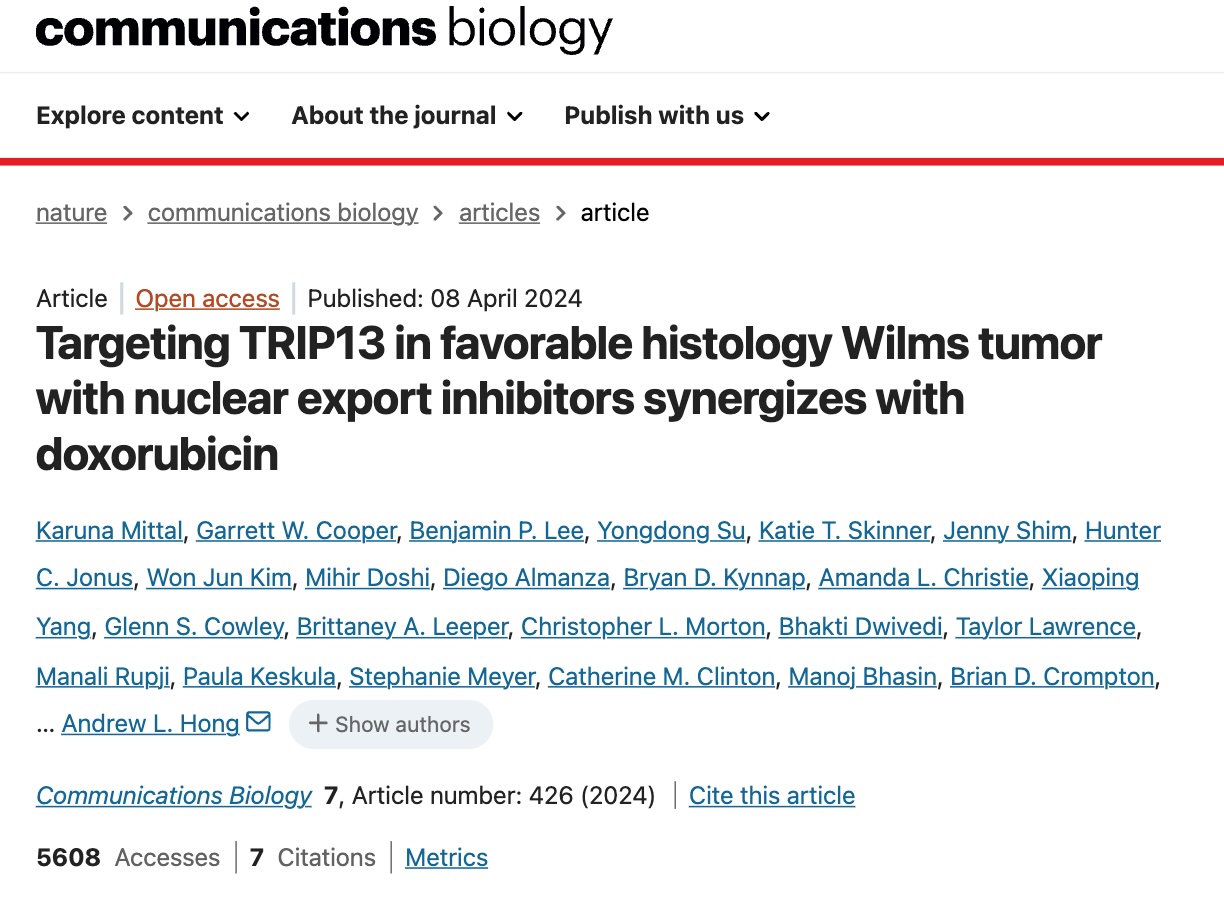
<p>The work establishes patient-derived Wilms tumor cell lines as faithful preclinical models, identifies XPO1 as a therapeutic vulnerability through loss-of-function screening, and demonstrates that combining the FDA-approved XPO1 inhibitor KPT-330 with doxorubicin produces durable remissions in vivo — findings that have contributed to an active Phase II clinical trial <a href="https://clinicaltrials.gov/study/NCT05985161?term=AREA%5BConditionSearch%5D(%22Neurofibrosarcoma%22)%20AND%20AREA%5BBasicSearch%5D(gene%20therapy)&amp;rank=8">NCT05985161</a>.</p>

<p>The manuscript can be found <a href="https://www.nature.com/articles/s42003-024-06140-6">online</a>.</p>

<p><img src="/assets/images/comms_bio_paper.jpg" alt="Conference photo" /></p>]]></content><author><name>Garrett Cooper</name></author><category term="blog" /><category term="Manuscript" /><category term="Pediatrics" /><category term="Cancer" /><summary type="html"><![CDATA[Our study, Targeting TRIP13 in favorable histology Wilms tumor with nuclear export inhibitors synergizes with doxorubicin, is published in Communications Biology.]]></summary></entry></feed>